
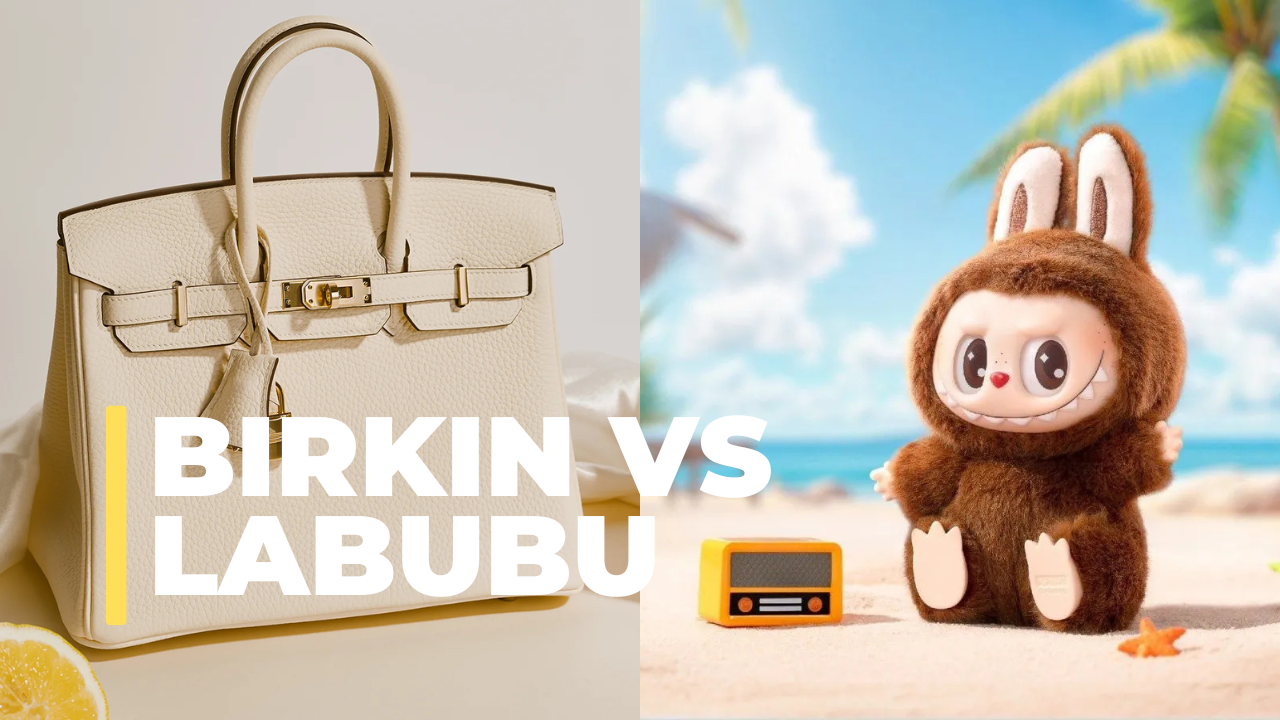
Birkin vs Labubu might sound like an unlikely match-up – a $10,000+ handbag versus a $20 vinyl toy – but both tell the same story about why humans chase, collect and attach meaning to things. From scarcity to status, belonging to identity, these icons show how objects become more than objects. But beneath the hype lies a deeper question: what do they really say about us?
Table of Contents
Origins & Cultural Rise
They may live worlds apart – one in luxury boutiques, the other in blind-boxes – but the stories of Birkin vs Labubu share something similar: when design and culture collide with a bit of luck, ordinary objects can take on extraordinary meaning.
Birkin: Born from a Basket and a Flight
The story begins in 1981 aboard an Air France flight, when British singer-actress Jane Birkin ended up sitting next to Hermès CEO Jean-Louis Dumas. As fate would have it, her straw basket spilled its contents onto his lap. Her casual comment of finding it difficult to find a practical bag large enough to hold her essentials led Dumas to sketch her dream bag. Dumas brought it to life, officially naming it the “Birkin” in 1984.
Fast forward today, the Birkin isn’t just a handbag – it’s a global icon recognized for a few defining traits:
- Unmatched craftsmanship – each Birkin is entirely handmade by a single Hermès artisan, requiring 18-40+ hours of work
- Sky-high value – Entry models start at around USD 10,000, while rare editions regularly fetch six-seven figures at auctions
- Cultural status – Once carried by Jane Birkin herself, it’s now seen among celebrities like Victoria Beckham and Kim Kardashian, collectors, and the ultra-wealthy, making it a symbol of taste, exclusivity and luxury
Labubu: From Nordic Myth to Global Fandom
Today, and a very different cultural wave emerged: Labubu had evolved from a quirky art toy into a cultural phenomenon – just as fiercely symbolic as the Birkin in its own realm.
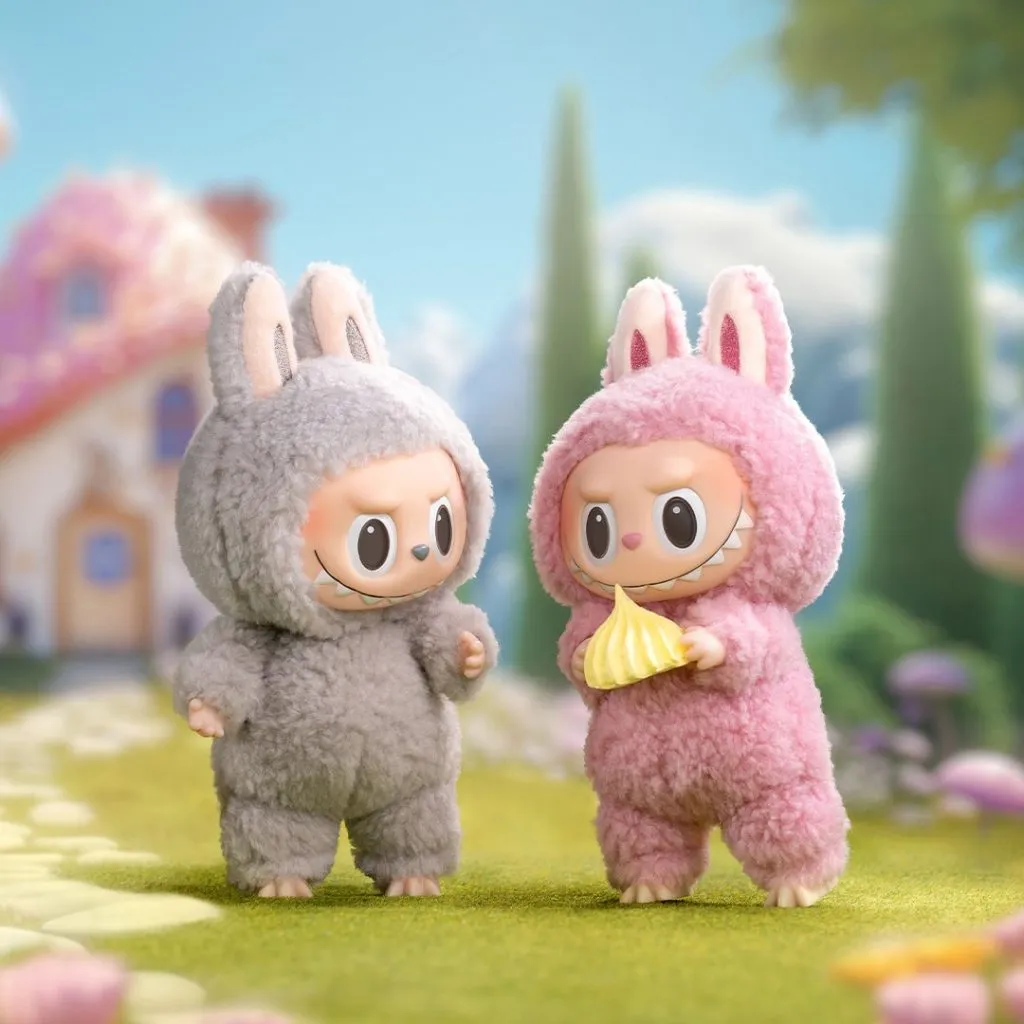
Labubu began in 2015 as part of Kasing Lung’s The Monsters series – a fairy-tale creature with pointy ears and a mischievous grin. Pop Mart licensed it in 2019, turning propelling Labubu into the blind-box craze. But it was a 2024 post from Blackpink’s Lisa showcasing a Labubu charm that triggered a global ripple. Soon, it was spotted with Rihanna, Kim Kardashian, Dua Lipa and more – turning it into a must-have fashion accessory
Scarcity & The Chase
From the polished stores of Hermès to the buzzing chaos of Pop Mart stores, the Birkin vs Labubu story is fueled by one thing: scarcity. Both prove that sometimes the chase itself is more intoxicating than the object at the end.
The Birkin Chase
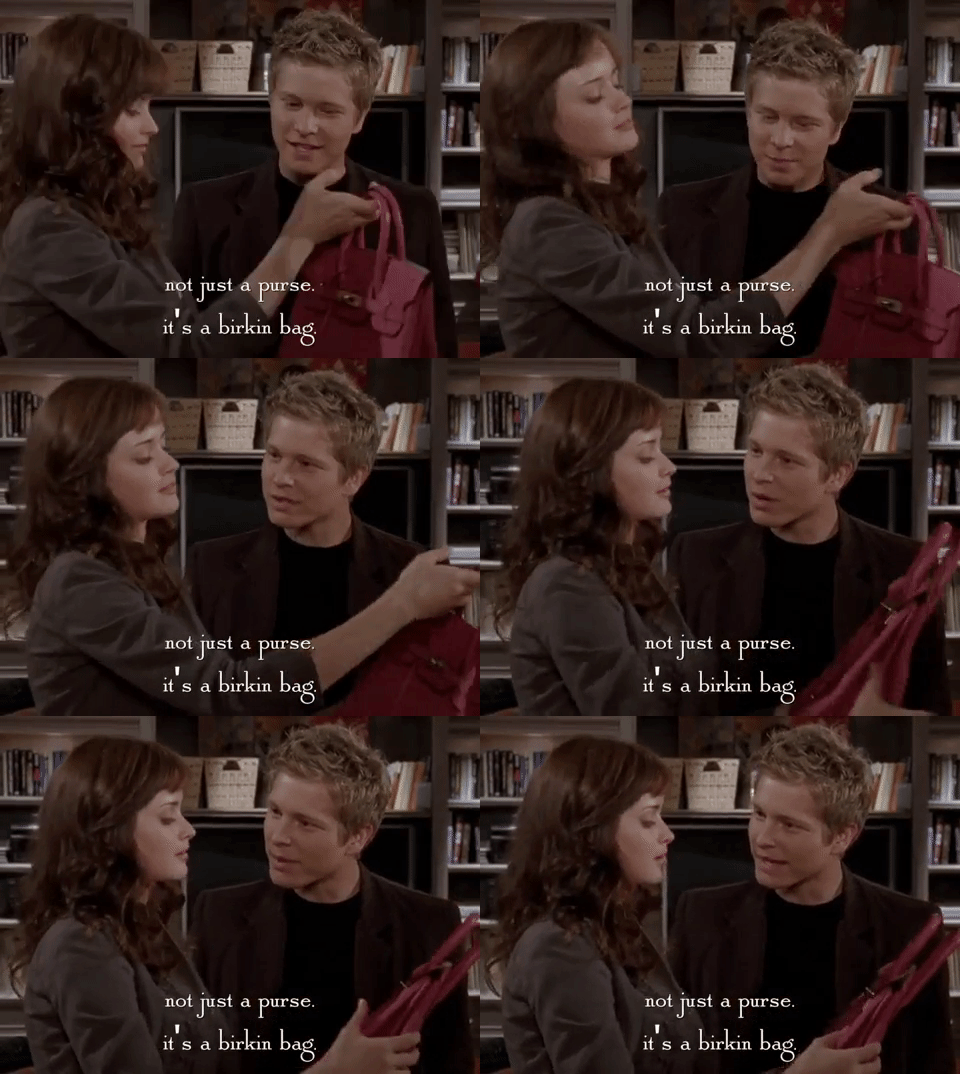
When it comes to the Birkin, money alone won’t get you in. Walking into a boutique with tens of thousands of dollars doesn’t guarantee you a bag. What you’re offered depends heavily on your relationship with a sales associate and your purchase history. Many collectors describe the process as a “game” that involves years of buying scarves, shoes, and tableware before finally receiving “the call”.
Even then, the exact size, colour, or leather you dream of is rarely guaranteed. This unpredictability fuels the chase, making the moment of being offered a Birkin feel like a rite of passage rather than a mere purchase.
The Labubu Hunt
Labubu operates in a completely different universe, but the mechanics are surprisingly similar. Pop Mart thrives on blind-box culture, event-only exclusives, and surprise drops that sell out in minutes. Collectors often describe the experience as addictive – like a lottery where each unboxing promises a dopamine hit.

The most coveted designs vanish instantly and reappear on resale markets at multiple times their original price. For many, the hunt – tracking release calendars, trading with fellow fans, and refreshing apps at midnight – is just as thrilling as owning the toy itself.
Why Scarcity Works
When something is hard to get, we automatically value it more, even if the item itself hasn’t changed. Part of it is FOMO, nobody wants to be left behind when everyone else is chasing the same thing. Another part comes from the thrill of knowing others want it too; owning it feels like joining an exclusive club. And then there’s the dopamine effect of unpredictability – whether it’s opening a blind box and hoping for a rare Labubu or finally getting the long-awaited call from Hermès, the unpredictability makes the reward even sweeter.
A Sense of Identity & Belonging
Scarcity is just the start. Once someone finally gets their hands on a Birkin or a Labubu, the object itself takes on a different weight: it becomes part of who they are.
Owning a Birkin isn’t just about carrying a bag. It’s the subtle nod from the other people who recognize it, the quiet entry into a club where unspoken rules of taste and class apply. For many, it marks a milestone proof that years of saving, waiting, or relationship-building with Hermès paid off. That feeling of arrival becomes stitched into the bag itself.
Labubu collectors describe something similar. When you finally unbox a rare pull or land a drop after weeks of sold-out releases, it’s not just a toy – it’s a story you get to share. Post it online, display it on your shelf, trade it with others, and suddenly you’re part of a global conversation. The figure signals “I get it. I belong here.”
Different aesthetics, different price points, but the psychology is the same: people aren’t just chasing things – they’re chasing identities, relationships and affirmation.
And that’s why debates about these objects often feel so heated. They’re not really about leather or vinyl. They’re about a deeper human need to be seen, understood, and be a part of something bigger than ourselves.
The Psychology of Collecting
Humans have been collectors for as long as history remembers – shells, coins, stamps, sneakers, NFTs. The impulse hasn’t changed, but the stage has. Today, a Birkin “bag wall” or a Labubu lineup isn’t just private satisfaction; it’s a public performance, a badge of identity shared on Instagram, TikTok, or in a collector’s forum.
Why do we do it? The motivations run deep:
- Control and mastery: Completing a set or finally landing “the one” brings order and a sense of achievement to a chaotic world
- Nostalgia and storytelling: Objects double as memory anchors – a Birkin could mark a milestone while a Labubu from that 4 a.m. queue gives you a story to tell
- Scarcity and dopamine: Anticipation is often sweeter than ownership. Blind boxes and Hermès waitlists trigger the same rush as gambling
- Community reinforcement: Collecting sticks harder when it’s witnessed. Posting your bag rotation or unboxing isn’t just flexing turns into a ritual of validation
But here’s the catch: most collectors admit the joy fades. The brain normalizes each new acquisition and sets its sights on the next. Which is why it really isn’t about the object themselves but more about the psychology: the chase, the story, and the fleeting sense of belonging.
The Cycle of Fading Icons
Every generation crowns its own cultural icons. Some feel so dominant in their moment that it’s hard to imagine they’ll ever lose relevance. Yet history shows they almost always do.
Cabbage Patch Kids sparked riots in toy stores in the 1980s. Tamagotchis had kids sneaking digital pets into classrooms in the ’90s. Beanie Babies turned bedrooms into trading floors in the early 2000s. Each had the same markers: scarcity, resale frenzy, and status. And yet, most of them now live in cardboard boxes, their value reduced to nostalgia.
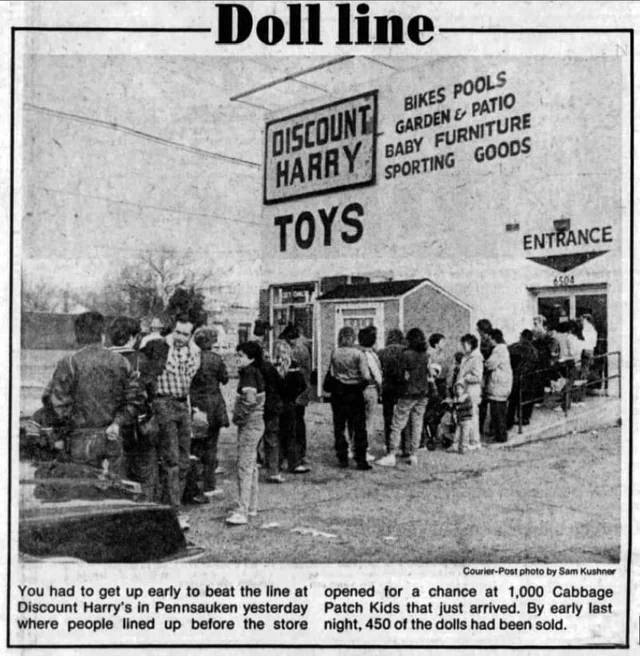
The forces that make an icon powerful – scarcity, belonging, identity – also plant the seeds of its decline. Over time, the novelty wears off, the market floods, and new status signals emerge. Even the Birkin, long considered untouchable, has faced doubts on whether younger generations will continue to revere the same symbols, or if a new cultural currency will take their place. Labubu, for all its hype, will one day meet the same test.
That doesn’t make these objects meaningless. A Birkin tied to an important life event, or a Labubu bought with friends at a midnight drop, holds value because of the memories stitched into it. What fades is the symbol, not the story. The cycle reminds us that cultural icons aren’t permanent treasures – they’re snapshots of desire, belonging and identity at a particular moment in time.
Finding Meaning That Lasts Beyond Objects
Birkins and Labubus were never meant to define us. Objects can spark joy, but they’re fragile foundations of identity. When culture shifts, or when the thrill of the chase wears off, what’s left?
The stronger move is to treat possessions as accents, not anchors. A bag, a toy, a collection – they can add colour to your story, but they shouldn’t be the story. Who you are runs deeper than what you display.
That’s why it’s worth spending time on pursuits that sharpen the mind and feed the soul: learning a skill, diving into a hobby, building something that lasts. These aren’t just pastimes; they’re sources of resilience, confidence, and connection. Unlike any trend, they grow with you – and they stay relevant no matter what the resale market says.
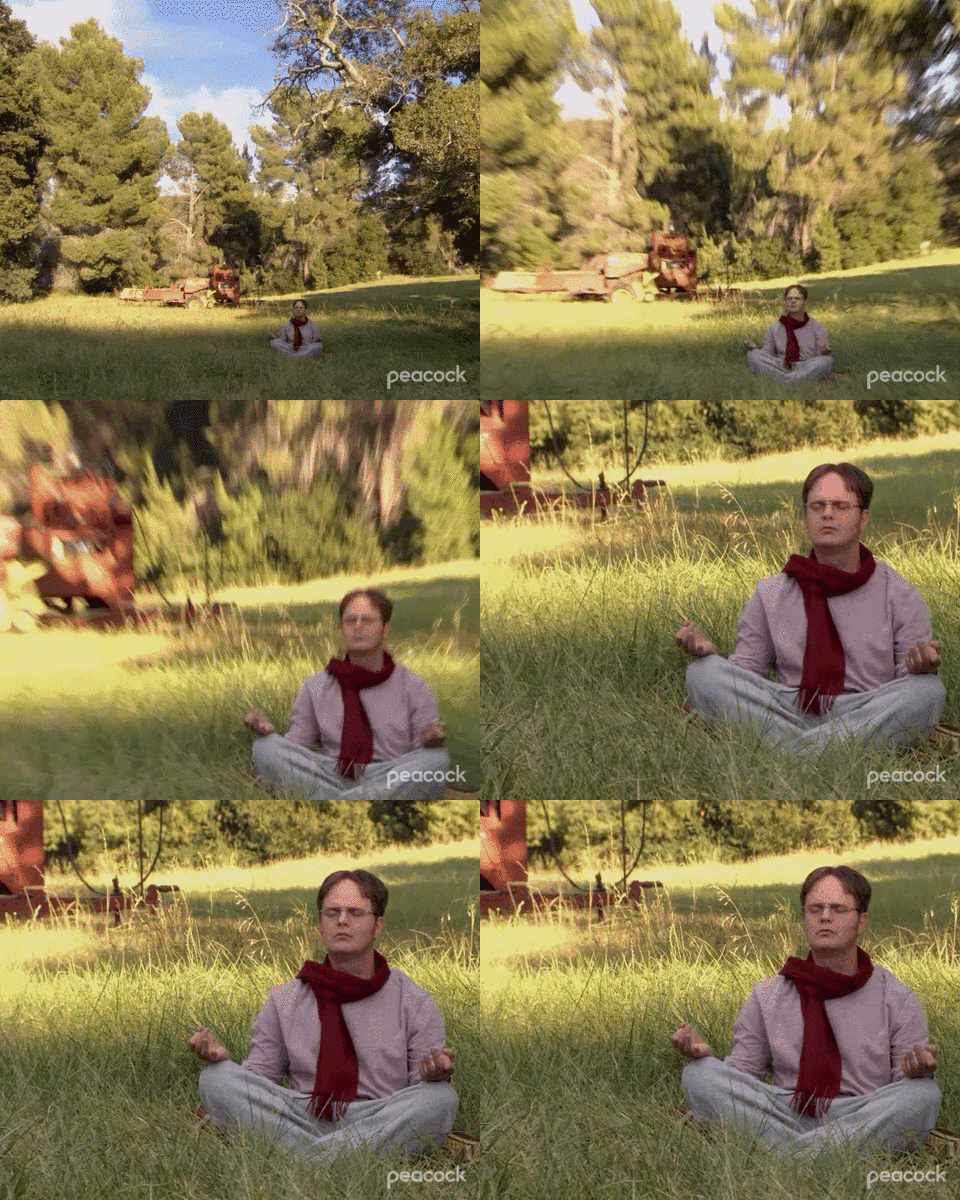
In the end, things can decorate a life. But only actions, growth, and relationships can define one.
Conclusion
Birkins and Labubus can signal status, taste, even community – but they shouldn’t define who we are. Objects fade, trends shift, and shelves get cleared. What lasts is the person behind them.
A bag or a figurine might be part of your expression, but the real imprint comes from how you think, create, and connect. That’s the spirit of Live, Laugh, Lah: enjoy the chase if you like, but don’t mistake it for your story.