Investing no longer requires thousands of dollars upfront. Platforms like IBKR and Syfe Trade make it simple for beginners to access global markets at low cost. This guide will show you the exact steps to get started, so you can build wealth steadily without overcomplicating things.
Table of Contents
Guide Overview
Think $100 is too little to start investing? Think again. The truth is, investing isn’t about having a huge starting amount – it’s about building the right habits early. In this guide, we’ll show you exactly how to start investing in Singapore with just $100 and why the key to long-term success is simply doing the right thing again and again, consistently.
If you asked anyone who has been investing for years, they’ll all tell you the same thing: “I wish I started earlier”. Trust me, I’m one of them too. Getting started matters more than waiting for the “perfect” time, because every year you delay is a year you miss out on potential growth.
Here’s what we’ll cover:
- How to overcome common beginner mistakes
- Why most people should focus on simple, passive investing instead of stock-picking
- The best low-cost platforms in Singapore that everyone should use
- How to build an easy, repeatable routine so investing becomes second nature
By the end, you’ll know how to make your first $100 investment confidently – and more importantly, how to keep repeating that process to grow wealth over time.
Step 1: Understanding Why Investing Matters (The Math is Definitely Mathing!)
Before we even talk about ETFs or platforms, let’s get real: take a look at your bank account balance. If all your extra money is just sitting there after covering your emergency fund, then its slowly losing value to inflation. Think back to how much a trolley of groceries cost 10 years ago. Now think about how much it costs today. Big difference right? That’s inflation at work – and it’s the hidden cost of leaving too much cash idle.
But here’s the deeper question: why even bother growing your wealth in the first place? The truth is, money isn’t just about buying more things. It’s about giving yourself choices. Imagine being able to:
- Quit that toxic job (or at least afford a break to pursue something that sparks joy)
- Leave an unhealthy household situation, especially if you’re stuck in one
- Stop living in that endless cycle of wake up → work → complain about work → sleep → repeat
Investing is about quietly building those options for yourself – and the earlier you start, the more freedom you create for your future self. The future is inevitable, so you might as well welcome it in abundance.

And here’s the best part: you don’t need to see huge returns instantly. Thanks to compound interest, even small amounts invested today grow on top of themselves over time. Your money starts making more money – and that snowball effect is what creates real wealth in the long-run.
Pro Tip: Only invest with money you won’t need in the short-term. A good rule of thumb: don’t touch money you’ll need within the next 3-5 years.
Step 2: Get the Right Investor Mindset
Before you even make your first trade, the biggest thing that separates successful investors from those who give up too early is mindset.
The stock market doesn’t reward the smartest person in the room – it rewards the most patient one. Here’s what that means for you:
- Don’t chase quick wins. Many beginners jump in expecting overnight profits. But investing is about decades, not days
- Ignore the noise. Checking prices every hour, panicking when markets dip, or buying just because everyone else is – these are the traps that make people quit
- Trust the process. Markets move up and down in the short term, but historically they’ve grown over time
The truth is, those early emotions are part of the process. What matters is learning to think long-term. A small dip today doesn’t matter if your goal is 10, 20, or even 30 years down the road.
So instead of stressing over timing the market, focus on building a habit. Treat investing like planting a tree — it won’t grow overnight, and once in awhile a branch or two may fall, but in a few years it will be a strong tree bearing you fruits.

Step 3: Decide What to Invest In
Now that you’ve got the right mindset, the big question is: what should you actually buy with your first $100?
There are two main styles of investing:
- Active investing — picking individual stocks, trying to beat the market, researching company after company. This sounds exciting, but it’s also stressful, time-consuming, and most beginners lose money this way
- Passive investing — buying into broad ETFs that track entire markets, like the S&P 500 or Nasdaq 100 that automatically gives you instant diversification and higher chance of long-term success
That’s why for most beginners — and honestly, even for most experienced investors — passive investing makes the most sense. Two of the best ETF options for Singapore investors are:
- CSPX (iShares Core S&P 500 UCITS ETF) – tracks the S&P 500 (the 500 largest companies in the US)
- Think of this as your “base” investment. It’s broad, balanced, and gives you exposure to the strongest companies in the world
- QQQM (Invesco Nasdaq 100 ETF) – tracks the Nasdaq 100 (tech-focused, includes companies like Apple, Microsoft, and Google)
- This adds a “growth element” to your portfolio, since tech has outperformed the market historically and will likely continue to grow as it powers the future
With just these two ETFs, you don’t need to guess which stock will win – you’re essentially betting on the biggest and strongest companies in the world.

Pro tip: Depending on your preference, a simple allocation could be 70% CSPX (for your foundation) and 30% QQQM (for growth). This way, you’re not going “all in” on tech, but you’re still capturing its upside.
Step 4: Choose the Right Platform
Now that you know what to buy, the next step is figuring out where to buy it. In Singapore, two of the most cost-efficient options are Interactive Brokers (IBKR) and Syfe Trade.
Interactive Brokers (IBKR)
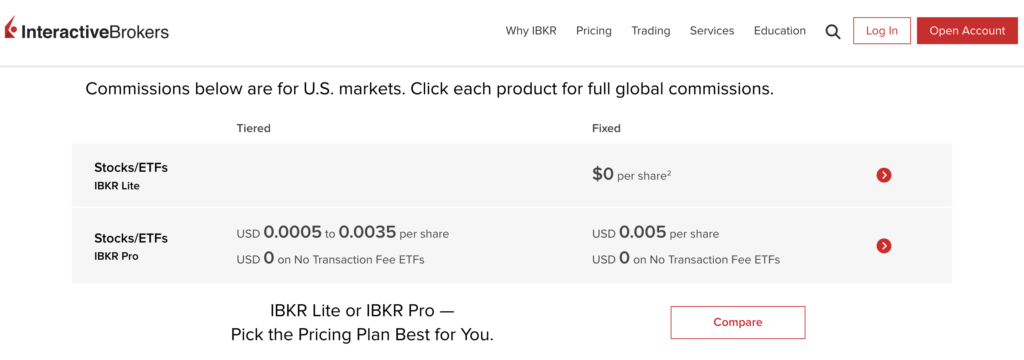
IBKR is one of the most cost-effective brokers globally. If you’re buying CSPX and QQQM, you can sign up for an IBKR Pro account. The fees are super low – especially if you remember to switch to Tiered Pricing after signing up.
However, if you’re buying US-listed stocks or ETFs only like QQQM, you can even trade for free by signing up for an IBKR Lite account (though note: IBKR Lite isn’t available everywhere, do have a quick check if you’re reading from elsewhere; you are unable to purchase CSPX with IBKR Lite as its listed on the London Stock Exchange).
Syfe Trade
Syfe, on the other hand, feels almost like the opposite of IBKR. The app is clean, beginner-friendly, and really easy to get the hang of. Best part? You get at least 2 free trades every month, which means if you’re just dollar-cost averaging (DCA) into CSPX and QQQM once per month, it’s essentially free. If you go beyond that, the fees are slightly higher than IBKR, but for a casual start, Syfe keeps things simple and affordable.
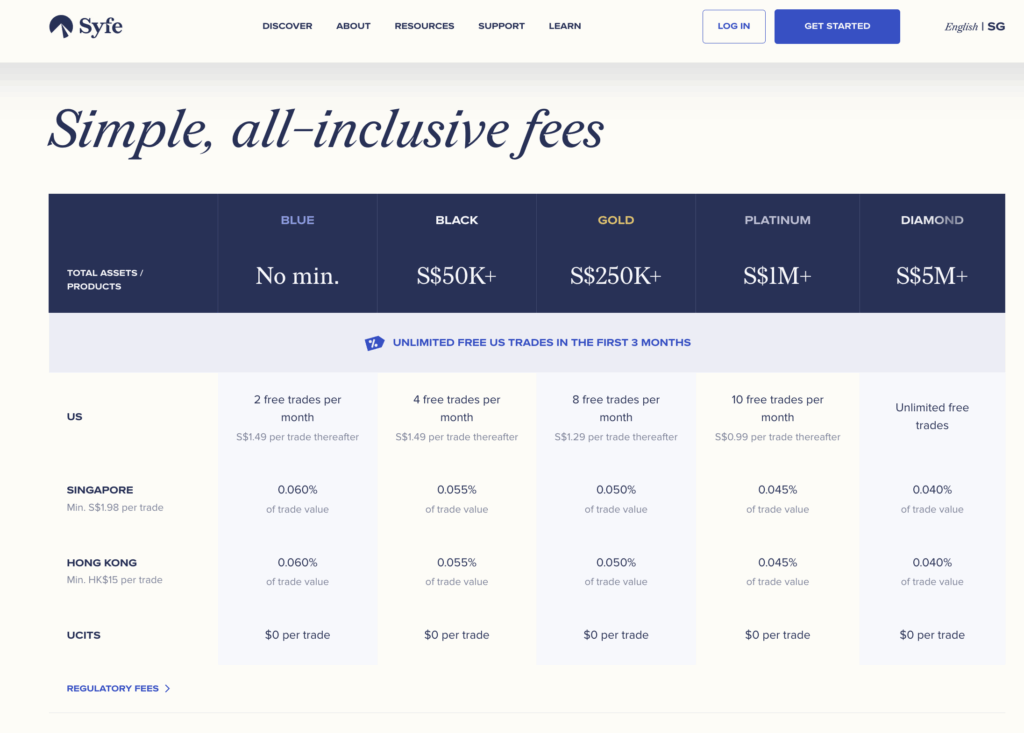
I’m currently using Syfe Trade myself – if you’re thinking of trying it out, you can sign up here to get started with some perks.
Pro Tip: If you’re starting with small amounts and want something stress-free, Syfe is a great entry point. But once your portfolio grows and you’re investing more than the free trade limit, IBKR will likely save you more in fees over the long run.
Step 5: Start Small & Build Consistency
By now, you’ll know which ETF and platform to trade on – the next step is simple: just start.
Investing isn’t about timing the market perfectly. It’s about building the habit of putting your money to work. Even if its just $100 or $200 a month, what matters most is consistency.
The good news? You don’t need thousands of dollars to begin:
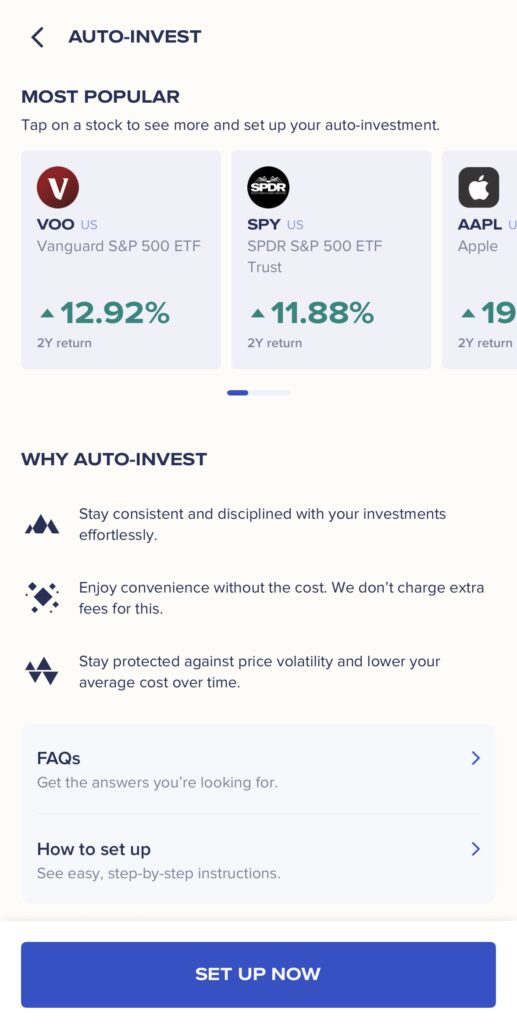
- On Syfe Trade, you can start with as little as USD 50 for CSPX or USD 1 for QQQM thanks to fractional trading, and since they give you at least two free trades per month, its basically free to dollar-cost average
- On Interactive Brokers (IBKR), you can buy both CSPX and QQQM starting from just USD 1
This means anyone can get started – no matter your budget.
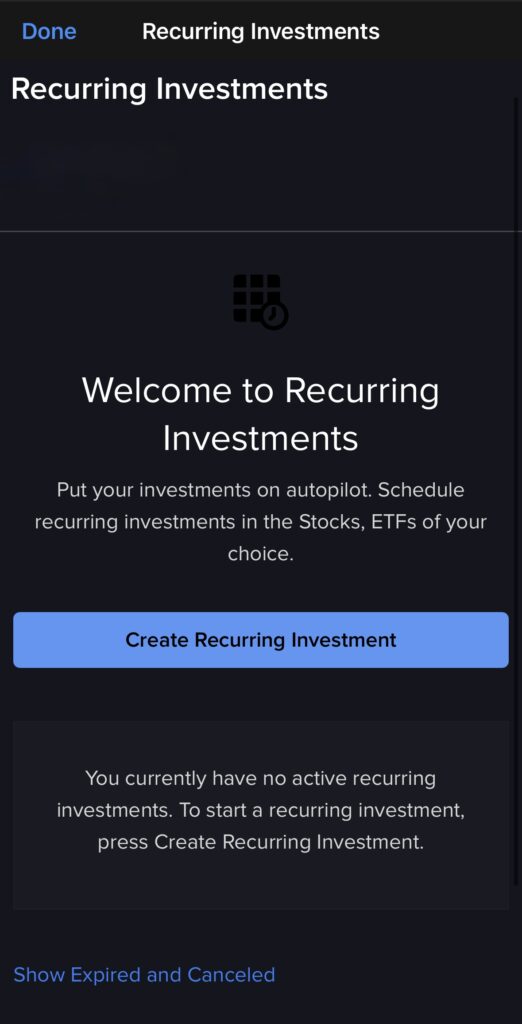
The easiest approach for beginners is to set up a recurring investment plan (Syfe and IBKR both alow this). By putting in a fixed amount every month, you’re dollar-cost averaging (DCA) into your chosen ETF every month – rain or shine, good market or bad. Over time, this smooths out volatility and keeps you disciplined.
Step 6: Stay the Course
Once you’ve been investing for a while, don’t just “set it and forget it” forever. Life changes — your income goes up, your expenses shift, maybe you get married or plan for a house. Your investing plan should grow with you.
That said, staying the course doesn’t mean watching your portfolio every day (please don’t – that’s how you drive yourself crazy). Instead, review your plan once or twice a year and ask yourself:
- Am I still comfortable with the amount you’re investing monthly?
- Do I have extra savings you can increase your contributions with?
- Are my investments still aligned with your long-term goals (retirement, financial independence, etc.)?
The hardest part of investing isn’t the math – it’s your emotions. You’ll feel tempted to stop when markets fall, or to choose the “next hot stock” when markets are booming. But most of the time, it’s the boring, consistent approach that outperforms.
As your confidence grows, you could explore adding other assets for diversification — but honestly, for most people, sticking with something simple like CSPX and QQQM is more than enough to build wealth over the long run.
FAQ
- How do I fund my brokerage account from Singapore?
- Most platforms accept FAST bank transfers or Pay Now from local banks like DBS, OCBC or UOB. Just follow the instructions shown on the app.
- Do I have to pay taxes when investing in CSPX or QQQM?
- If you’re a Singapore tax resident, you don’t pay capital gains tax on your investments
- However, for US-listed ETFs like QQQM, you’ll face a 30% withholding tax on dividends. CSPX, which is Ireland-domiciled, only incurs 15% withholding tax, which makes it the most tax-efficient for long-term investors. These are automatically deducted.
- What fees should I watch out for besides trading commissions?
- Currency conversion fees (SGD → USD). IBKR offers some of the lowest rates (~0.02%)
- ETF expense ratios (CSPX: 0.07%, QQQM: 0.15%). These are built into the fund and deducted automatically
- Platform fees: Syfe and IBKR doesn’t charge recurring management fees for its brokerage platform, unlike other robo-advisors
- What happens if my broker goes bust?
- This is where regulation matters. IBKR and Syfe are licensed under MAS in Singapore, and client assets are kept in segregated accounts. This means your money isn’t mixed with the company’s operations. Even in the unlikely event the broker shuts down, your investments remain safe and transferable.
- Can I sell my investments anytime?
- Yes, both IBKR and Syfe Trade allow you to sell your stocks and ETFs anytime. Proceeds are credited into your brokerage account in USD, and you can convert them back into SGD if needed. Keep in mind, that markets are volatile – selling in a panic often locks in losses.
- How much cash should I keep in cash before I start investing?
- Always set aside an emergency fund first – typically 3-6 months of living expenses, plus insurance coverage. This ensures you don’t need to sell your investments in a crisis. Only your excess cash beyond this should go into the market.
- Why not just buy an ILP or unit trust from my insurance agent or bank?
- Because they’re unnecessarily expensive. ILPs and unit trusts often charge 1.5-5% upfront plus 1-2% every year in management fees. On $10,000, that’s $150-500 gone immediately, and another $100-200 each year – money that could’ve stayed invested. Low-cost ETFs like CSPX or QQQM on Syfe Trade or IBKR keeps fees close to zero, which means more of your returns stay in your pocket.
What’s next?
If you’ve made it this far, you already know that starting to invest with just $100 is possible — and honestly, the hardest part is simply taking the first step. You don’t need to wait until you have “enough money.” What matters is building the habit of investing early.
Here’s what you can do next:
- Pick your platform – If you’re brand new, try Syfe Trade for its free monthly trades and beginner-friendly app. If you want more global access, open an IBKR Pro account and set it to Tiered Pricing for the lowest costs or IBKR Lite account if you’re mainly trading U.S. stocks or ETFs only
- Decide on your ETFs – Most beginners should start with CSPX and QQQM to get diversified exposure
- Set up recurring investments – Automate $100 (or whatever amount you’re comfortable with) every month so you don’t overthink it
- Stay consistent – Don’t stress about short-term ups and downs. Think long-term.
With that, I wish you every success and hope you get started so you can Live, Laugh, Lah in life!